
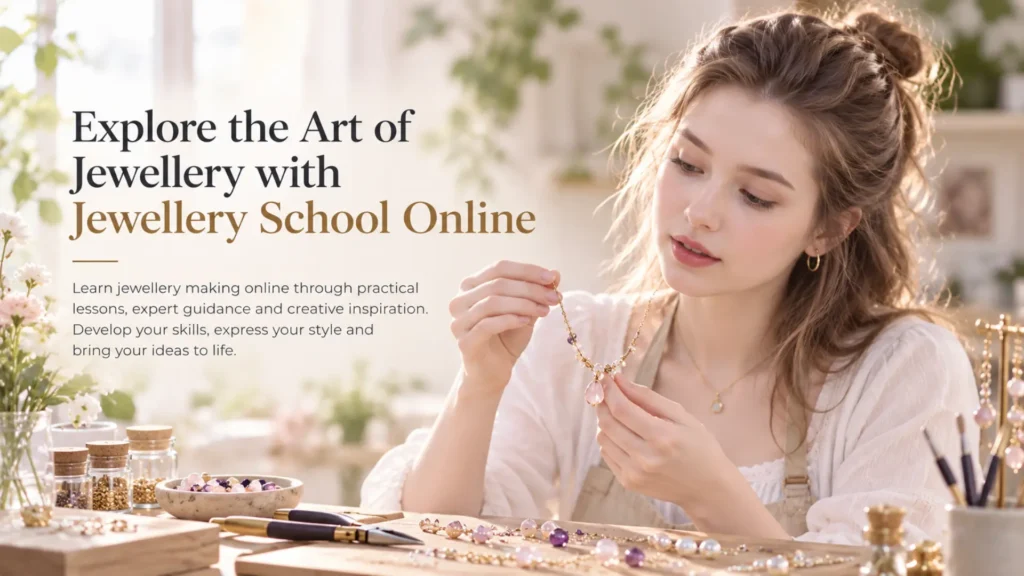
Explore the Art of Jewellery with Jewellery School Online
Jewellery making is a creative craft that combines artistic design, practical techniques, and knowledge of different materials. From simple beaded accessories to handcrafted silver rings, the process involves transforming individual components into wearable pieces. Jewellery School Online explores the essential skills and methods involved in learning this traditional yet continually evolving craft. Beginners can start by understanding how basic tools, wires, beads, and metal components work together before attempting more complex projects. Different jewellery-making techniques require different levels of precision, patience, and equipment, making a structured approach to learning particularly useful. Understanding these fundamentals helps develop the practical skills needed to create jewellery with secure connections, balanced designs, and carefully finished surfaces.
Jewellery has served decorative, cultural, and symbolic purposes across many societies throughout history. The materials and methods used to produce jewellery have changed significantly, but many traditional techniques remain important in contemporary craftsmanship. Modern jewellery makers work with a wide range of materials, including precious metals, base metals, gemstones, glass beads, and manufactured findings. Some techniques rely primarily on hand tools, while others involve controlled heating, metal forming, or specialised finishing equipment. Online educational resources can introduce these methods through demonstrations, explanations, and examples that learners can revisit during practice. Developing jewellery-making skills involves understanding not only how an item is assembled but also why particular materials and construction methods are suitable for its intended use.
Contents
What Does Learning Jewellery Making Involve?
Learning jewellery making begins with an understanding of materials, tools, measurements, and fundamental construction techniques. Common introductory activities include opening and closing jump rings, attaching clasps, arranging beads, working with wire, and assembling decorative components. These processes help beginners develop hand coordination and recognise the importance of accuracy when producing wearable objects. As experience increases, learners may explore metal shaping, ring construction, surface finishing, and techniques that require specialised equipment. Material selection is also important because different metals and decorative components vary in hardness, flexibility, durability, and maintenance requirements. A useful learning process combines technical knowledge with repeated practical exercises, allowing the maker to identify mistakes and improve construction quality over time.
How Online Jewellery Courses Support Practical Learning
Online jewellery education allows technical demonstrations and written instructions to be studied without requiring every lesson to take place in a physical classroom. Recorded tutorials are particularly useful when a technique involves a sequence of small movements that benefit from repeated viewing. Learners can examine how tools are positioned, how components are connected, and how finished pieces are checked for stability. However, watching a demonstration does not replace the physical practice needed to develop hand skills or the direct supervision required for certain hazardous processes. Activities involving open flames, chemical treatments, or high-temperature equipment require appropriate safety precautions and, where necessary, supervised training. Online learning is therefore most effective when clear instruction is combined with suitable tools, manageable projects, and careful attention to workshop safety.
Essential Techniques Used in Jewellery Making
Jewellery making includes several distinct techniques, each requiring its own combination of tools, materials, and technical understanding. Some methods focus on assembling ready-made components, while others involve shaping or transforming raw materials. Beading and simple wire construction are common starting points because many introductory projects can be completed with basic hand tools. Metal-based projects may require additional preparation, accurate measurement, and knowledge of how different materials behave under pressure or heat. Finishing techniques are equally important because rough edges, weak connections, and poorly secured components can affect comfort and durability. Understanding the differences between these approaches helps learners identify which skills and equipment are appropriate for a particular jewellery project.
Beading and Fashion Jewellery Construction
Beading is a form of jewellery making in which decorative beads are arranged and connected using thread, wire, cord, or other supporting materials. Beads can be manufactured from glass, ceramic, wood, metal, gemstones, and various synthetic substances, with each material offering different physical and visual properties. Fashion jewellery often combines these materials with findings such as clasps, earring hooks, chains, and connectors to produce wearable accessories. Accurate measurements are important because bead dimensions and spacing influence the length, weight, and appearance of a finished piece. Beginners also need to understand the difference between flexible stringing materials and rigid wire structures, as each requires a suitable method of fastening. Well-constructed beaded jewellery depends on appropriate material selection, secure connections, and thoughtful distribution of weight throughout the design.
Wire Jewellery and Metalworking Fundamentals
Wire jewellery involves bending, shaping, wrapping, and connecting metal wire to create decorative or structural elements. Common applications include simple loops, wrapped connections, decorative spirals, pendants, and components used to hold beads or stones. The behaviour of a wire depends on factors such as its metal composition, thickness, shape, and hardness. Round-nose pliers are commonly used for forming curves and loops, while flat-nose or chain-nose pliers help grip and position components. Repeated bending can cause some metals to work-harden, which changes their resistance to further shaping and may eventually contribute to breakage. Understanding these properties allows jewellery makers to choose appropriate wire and avoid unnecessary damage when constructing delicate pieces.
Silver Rings and Metal Clay Techniques
Making a silver ring introduces additional technical considerations, including accurate sizing, metal shaping, joining methods, and surface finishing. Sterling silver contains 92.5% silver by mass, with the remaining 7.5% generally consisting of copper or other alloying metals. The additional metals improve certain working properties compared with pure silver, although the material can still scratch, tarnish, or deform under inappropriate conditions. Metal clay offers a different approach to shaping jewellery because it contains fine metal particles held together with a binder that allows the material to be modelled before firing. During suitable firing, the binder is removed and the metal particles bond together, producing a solid metal object that may require further finishing. Ring making and metal clay projects must account for product-specific instructions, dimensional changes, and the safety requirements of heating equipment.
Building Jewellery-Making Skills Through Practice and Safety
Developing consistent jewellery-making skills requires attention to accuracy, repeatable techniques, appropriate equipment, and careful inspection of completed work. Beginners benefit from starting with manageable projects that introduce a small number of techniques before progressing to more demanding construction methods. Keeping notes about measurements, materials, tool choices, and common mistakes can help identify improvements between projects. Safety is an essential part of the process, particularly when using sharp cutters, rotating equipment, chemicals, or heat-producing tools. Suitable eye protection, ventilation, equipment maintenance, and manufacturer instructions should be considered according to the materials and methods involved. Whether jewellery making is pursued as a recreational craft or developed into a more advanced practical skill, understanding the relationship between design, construction, and material behaviour provides a reliable foundation for continued learning.
Can beginners learn jewellery making without previous experience?
Yes. Beginners can start with basic techniques such as beading, attaching clasps, and forming simple wire loops before attempting more advanced projects.
What basic tools are commonly used in jewellery making?
Common beginner tools include round-nose pliers, chain-nose pliers, wire cutters, measuring tools, and suitable jewellery findings.
Is jewellery making possible to learn entirely online?
Many fundamental techniques can be introduced online, but practical experience is essential, and hazardous processes may require supervised instruction.